Base class representing a system level integrated quantity. More...
#include <IntegrandBase.h>
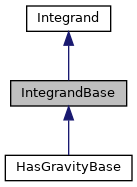
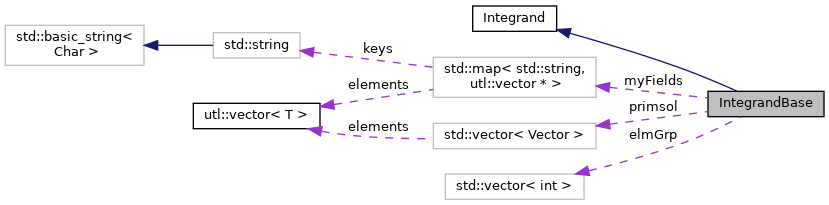
Public Member Functions | |
| virtual bool | parse (const tinyxml2::XMLElement *) |
| Parses a data section from an XML element. | |
| virtual void | printLog () const |
| Prints out the problem definition to the log stream. | |
| virtual void | setMode (SIM::SolutionMode mode) |
| Defines the solution mode before the element assembly is started. More... | |
| SIM::SolutionMode | getMode (bool=false) const override |
| Returns current solution mode. | |
| virtual void | setIntegrationPrm (unsigned short int, double) |
| Initializes an integration parameter for the integrand. | |
| virtual double | getIntegrationPrm (unsigned short int) const |
| Returns an integration parameter for the integrand. | |
| virtual void | initIntegration (size_t, size_t) |
| Initializes the integrand with the number of integration points. More... | |
| virtual void | initIntegration (const TimeDomain &, const Vector &, bool=false) |
| Initializes the integrand for a new integration loop. More... | |
| virtual void | initLHSbuffers (size_t) |
| Initializes and toggles the use of left-hand-side matrix buffers. | |
| virtual void | initMatrixBuffers (size_t, size_t ielMax) |
| Initializes the use of left-hand-side matrix buffers. More... | |
| virtual void | initResultPoints (double time, char=0) |
| Initializes the integrand for a new result point loop. More... | |
| virtual void | initNodeMap (const std::vector< int > &) |
| Initializes the global node number mapping for current patch. | |
| virtual void | setSecondaryInt (GlobalIntegral *=nullptr) |
| Assigns a secondary integral to be computed (for reaction forces). | |
| virtual GlobalIntegral & | getGlobalInt (GlobalIntegral *gq) const |
| Returns the system quantity to be integrated by *this. More... | |
| virtual void | initForPatch (const ASMbase *pch) |
| Interface for initialization of integrand with patch-specific data. More... | |
| LocalIntegral * | getLocalIntegral (size_t nen, size_t iEl, bool neumann) const override |
| Returns a local integral contribution object for the given element. More... | |
| bool | initElement (const std::vector< int > &MNPC, LocalIntegral &elmInt) override |
| Initializes current element for numerical integration. More... | |
| bool | initElement (const std::vector< int > &MNPC, const FiniteElement &fe, const Vec3 &X0, size_t nPt, LocalIntegral &elmInt) override |
| Initializes current element for numerical integration. More... | |
| bool | initElement (const std::vector< int > &MNPC, const std::vector< size_t > &elem_sizes, const std::vector< size_t > &basis_sizes, LocalIntegral &elmInt) override |
| Initializes current element for numerical integration (mixed). More... | |
| bool | initElement (const std::vector< int > &MNPC, const MxFiniteElement &fe, const std::vector< size_t > &elem_sizes, const std::vector< size_t > &basis_sizes, LocalIntegral &elmInt) override |
| Initializes current element for numerical integration (mixed). More... | |
| bool | initElementBou (const std::vector< int > &MNPC, LocalIntegral &elmInt) override |
| Initializes current element for boundary integration. More... | |
| bool | initElementBou (const std::vector< int > &MNPC, const std::vector< size_t > &elem_sizes, const std::vector< size_t > &basis_sizes, LocalIntegral &elmInt) override |
| Initializes current element for boundary integration (mixed). More... | |
| virtual bool | hasInteriorTerms () const |
| Returns whether this integrand has explicit interior contributions. | |
| virtual bool | hasBoundaryTerms () const |
| Returns whether this integrand has explicit boundary contributions. | |
| void | activateElmGroup (const std::vector< int > &elms={}) |
| Assigns the group of active elements. | |
| bool | inActive (int iel) const |
| Returns true, if the element iel is deactivated. | |
| bool | evalSol1 (Vector &s, const FiniteElement &fe, const Vec3 &X, const std::vector< int > &MNPC, size_t nskip=0) const |
| Evaluates the secondary solution at a result point. More... | |
| virtual bool | evalSol2 (Vector &s, const Vectors &elmVec, const FiniteElement &fe, const Vec3 &X) const |
| Evaluates the secondary solution at a result point. More... | |
| virtual bool | evalSol (Vector &s, const FiniteElement &fe, const Vec3 &X, const std::vector< int > &MNPC) const |
| Evaluates the secondary solution at a result point. More... | |
| virtual bool | evalSol (Vector &s, const MxFiniteElement &fe, const Vec3 &X, const std::vector< int > &MNPC, const std::vector< size_t > &elem_sizes, const std::vector< size_t > &basis_sizes) const |
| Evaluates the secondary solution at a result point (mixed problem). More... | |
| virtual bool | evalSol (Vector &s, const TensorFunc &asol, const Vec3 &X) const |
| Evaluates the analytical secondary solution at a result point. More... | |
| virtual bool | evalSol (Vector &s, const STensorFunc &asol, const Vec3 &X) const |
| Evaluates the analytical secondary solution at a result point. More... | |
| virtual bool | evalSol (Vector &s, const VecFunc &asol, const Vec3 &X) const |
| Evaluates the analytical secondary solution at a result point. More... | |
| virtual bool | getPrincipalDir (Matrix &, size_t, size_t) const |
| Returns an evaluated principal direction vector field for plotting. | |
| virtual size_t | getNo2ndSolPerLine () const |
| Returns max number of 2ndary solution components to print per line. | |
| virtual void | primaryScalarFields (Matrix &) |
| Computes some derived primary solution quantities. | |
| virtual int | derivativeOrder () const |
| Returns the derivative order of the differential operator. | |
| virtual bool | writeGlvT (VTF *, int, int &, int &) const |
| Writes surface tractions/fluxes for a given time step to VTF-file. | |
| virtual bool | hasTractionValues () const |
| Returns whether there are any traction/flux values to write to VTF. | |
| virtual bool | diverged (size_t=0) const |
| Returns true if simulation diverged on integration point level. | |
| virtual NormBase * | getNormIntegrand (AnaSol *=nullptr) const |
| Returns a pointer to an Integrand for solution norm evaluation. | |
| virtual ForceBase * | getForceIntegrand (const Vec3 *, AnaSol *=nullptr) const |
| Returns a pointer to an Integrand for boundary force evaluation. | |
| virtual ForceBase * | getForceIntegrand () const |
| Returns a pointer to an Integrand for nodal force evaluation. | |
| size_t | getNoSpaceDim () const |
| Returns the number of spatial dimensions. | |
| virtual size_t | getNoFields (int=2) const |
| Returns the number of primary/secondary solution field components. | |
| virtual size_t | getNoGLMs () const |
| Returns the number of global Lagrange multipliers in the model. | |
| virtual std::string | getField1Name (size_t idx, const char *prefix=0) const |
| Returns the name of a primary solution field component. More... | |
| virtual std::string | getField2Name (size_t idx, const char *prefix=0) const |
| Returns the name of a secondary solution field component. More... | |
| virtual bool | suppressOutput (size_t, ASM::ResultClass) const |
| Filters a result components for output. | |
| virtual size_t | getNoSolutions (bool=true) const |
| Returns the number of solution vectors. | |
| virtual Vector * | getExtractionField (size_t=1) |
| Returns the patch-wise extraction function field, if any. | |
| Vector & | getSolution (size_t n=0) |
| Accesses the primary solution vector of current patch. | |
| Vectors & | getSolutions () |
| Accesses the primary solution vectors of current patch. | |
| void | resetSolution () |
| Resets the primary solution vectors. | |
| void | printSolution (std::ostream &os, int pindx) |
| Prints out the patch-wise solution vectors. | |
| virtual void | setNamedField (const std::string &, Field *) |
| Registers where we can inject a mixed-basis scalar field. | |
| virtual void | setNamedFields (const std::string &, Fields *) |
| Registers where we can inject a mixed-basis vector field. | |
| Vector * | getNamedVector (const std::string &name) const |
| Returns a vector where we can store a named field. | |
| virtual LinAlg::LinearSystemType | getLinearSystemType () const |
| Defines the properties of the resulting linear system. More... | |
| void | registerVector (const std::string &name, Vector *vec) |
| Registers a vector to inject a named field into. More... | |
| virtual void | getNodalDofTypes (std::vector< char > &) const |
| Returns nodal DOF flags for monolithic coupled integrands. | |
| double | getTimeLevel () const |
| Returns current time/load parameter for 2ndary solution evaluation. | |
| virtual LocalIntegral * | getLocalIntegral (size_t nen, size_t iEl, bool neumann=false) const=0 |
| Returns a local integral contribution object for the given element. More... | |
| virtual LocalIntegral * | getLocalIntegral (const std::vector< size_t > &nen, size_t iEl, bool neumann=false) const |
| Returns a local integral contribution object for the given element. More... | |
 Public Member Functions inherited from Integrand Public Member Functions inherited from Integrand | |
| virtual | ~Integrand () |
| Empty destructor. | |
| virtual void | setNeumannOrder (char) |
| Defines the Neumann order that is the subject of integration. More... | |
| virtual void | initPatch (size_t) |
| Define the index of the patch being processed. | |
| virtual LocalIntegral * | getLocalIntegral (const std::vector< size_t > &nen, size_t iEl, bool neumann=false) const |
| Returns a local integral contribution object for the given element. More... | |
| virtual int | getIntegrandType () const |
| Defines which FE quantities are needed by the integrand. | |
| virtual int | getReducedIntegration (int) const |
| Returns the number of reduced-order integration points. | |
| virtual int | getBouIntegrationPoints (int nGP) const |
| Returns the number of boundary integration points. | |
| virtual bool | reducedInt (LocalIntegral &elmInt, const FiniteElement &fe, const Vec3 &X) const |
| Evaluates reduced integration terms at an interior point. More... | |
| virtual bool | evalInt (LocalIntegral &elmInt, const FiniteElement &fe, const TimeDomain &time, const Vec3 &X) const |
| Evaluates the integrand at an interior point. More... | |
| virtual bool | evalIntMx (LocalIntegral &elmInt, const MxFiniteElement &fe, const TimeDomain &time, const Vec3 &X) const |
| Evaluates the integrand at an interior point. More... | |
| virtual bool | evalInt (LocalIntegral &elmInt, const FiniteElement &fe, const TimeDomain &time, const Vec3 &X, const Vec3 &normal) const |
| Evaluates the integrand at an element interface point. More... | |
| virtual bool | evalIntMx (LocalIntegral &elmInt, const MxFiniteElement &fe, const TimeDomain &time, const Vec3 &X, const Vec3 &normal) const |
| Evaluates the integrand at an element interface point. More... | |
| virtual bool | evalPoint (LocalIntegral &elmInt, const FiniteElement &fe, const Vec3 &pval) |
| Evaluates the dirac-delta integrand at a specified point. More... | |
| virtual bool | finalizeElement (LocalIntegral &elmInt, const FiniteElement &fe, const TimeDomain &time, size_t iGP=0) |
| Finalizes the element quantities after the numerical integration. More... | |
| virtual bool | finalizeElementBou (LocalIntegral &elmInt, const FiniteElement &fe, const TimeDomain &time) |
| Finalizes the element quantities after boundary integration. More... | |
| virtual bool | evalBou (LocalIntegral &elmInt, const FiniteElement &fe, const TimeDomain &time, const Vec3 &X, const Vec3 &normal) const |
| Evaluates the integrand at a boundary point. More... | |
| virtual bool | evalBouMx (LocalIntegral &elmInt, const MxFiniteElement &fe, const TimeDomain &time, const Vec3 &X, const Vec3 &normal) const |
| Evaluates the integrand at a boundary point. More... | |
| virtual void | setParam (const std::string &, double) |
| Assigns a parameter value to property functions of the integrand. | |
| virtual void | setParam (const std::string &, const Vec3 &) |
| Assigns parameter values to property functions of the integrand. | |
Protected Member Functions | |
| IntegrandBase (unsigned short int n) | |
| The constructor is protected to allow sub-classes only. | |
| bool | initElement1 (const std::vector< int > &MNPC, Vectors &elmVec, size_t nskip=0) const |
| Initializes the first primary solution vector for current element. More... | |
| bool | initElement2 (const std::vector< int > &MNPC, Vectors &elmVec, size_t nskip=0) const |
| Initializes all primary solution vectors for current element. More... | |
| Protected Member Functions inherited from Integrand | |
| Integrand () | |
| The default constructor is protected to allow sub-classes only. | |
| virtual bool | evalInt (LocalIntegral &, const FiniteElement &fe, const Vec3 &) const |
| Evaluates the integrand at interior points for stationary problems. | |
| virtual bool | evalIntMx (LocalIntegral &, const MxFiniteElement &fe, const Vec3 &) const |
| Evaluates the integrand at interior points for stationary problems. | |
| virtual bool | evalInt (LocalIntegral &, const FiniteElement &fe, const Vec3 &, const Vec3 &) const |
| Evaluates the integrand at interface points, stationary problems. | |
| virtual bool | evalIntMx (LocalIntegral &, const MxFiniteElement &fe, const Vec3 &, const Vec3 &) const |
| Evaluates the integrand at interface points, stationary problems. | |
| virtual bool | evalBou (LocalIntegral &, const FiniteElement &, const Vec3 &, const Vec3 &) const |
| Evaluates the integrand at boundary points for stationary problems. | |
| virtual bool | evalBouMx (LocalIntegral &, const MxFiniteElement &, const Vec3 &, const Vec3 &) const |
| Evaluates the integrand at boundary points for stationary problems. | |
| virtual bool | finalizeElement (LocalIntegral &elmInt, const TimeDomain &, size_t) |
| Finalizes the element quantities after the numerical integration. More... | |
| virtual bool | finalizeElement (LocalIntegral &) |
| Finalizes the element quantities after the numerical integration. More... | |
Protected Attributes | |
| unsigned short int | nsd |
| Number of spatial dimensions (1, 2 or 3) | |
| unsigned short int | npv |
| Number of primary solution variables per node. | |
| double | myTime |
| Evaluation time for the secondary solution. | |
| SIM::SolutionMode | m_mode |
| Current solution mode. | |
| std::vector< int > | elmGrp |
| List of currently active elements. | |
| Vectors | primsol |
| Primary solution vectors for current patch. | |
Private Attributes | |
| std::map< std::string, Vector * > | myFields |
| Named fields of this integrand. | |
Additional Inherited Members | |
| Public Types inherited from Integrand | |
| enum | Traits { STANDARD = 0 , NO_DERIVATIVES = 1 , SECOND_DERIVATIVES = 1<< 1 , THIRD_DERIVATIVES = 1<< 2 , AVERAGE = 1<< 3 , ELEMENT_CORNERS = 1<< 4 , ELEMENT_CENTER = 1<< 5 , G_MATRIX = 1<< 6 , NODAL_ROTATIONS = 1<< 7 , XO_ELEMENTS = 1<< 8 , INTERFACE_TERMS = 1<< 9 , NORMAL_DERIVS = 1<<10 , UPDATED_NODES = 1<<11 , PIOLA_MAPPING = 1<<12 , POINT_DEFORMATION = 1<<13 } |
| Enum defining the additional terms that an Integrand may require. More... | |
Detailed Description
Base class representing a system level integrated quantity.
Member Function Documentation
◆ evalSol() [1/5]
|
virtual |
Evaluates the secondary solution at a result point.
- Parameters
-
[out] s The solution field values at current point [in] fe Finite element data at current point [in] X Cartesian coordinates of current point [in] MNPC Nodal point correspondance for the basis function values
The default implementation assumes that only the first primary solution vector is needed in the secondary solution evaluation, and thus forwards to the evalSol1() method. Override this method if the secondary solution depends on more than that.
References evalSol1().
Referenced by GlbL2::evalInt(), GlbL2::evalIntMx(), evalSol(), ASMs2DLag::evalSolution(), ASMs3DLag::evalSolution(), ASMs2DmxLag::evalSolution(), ASMs2DTri::evalSolution(), ASMs3DmxLag::evalSolution(), ASMs1DLag::evalSolution(), ASMs1DSpec::evalSolution(), ASMs2DSpec::evalSolution(), ASMs3DSpec::evalSolution(), ASMs2Dmx::evalSolution(), ASMs3Dmx::evalSolution(), ASMs2D::evalSolution(), ASMs3D::evalSolution(), ASMu2Dmx::evalSolution(), ASMu3Dmx::evalSolution(), ASMu2D::evalSolution(), ASMu3D::evalSolution(), ASMs1D::evalSolution(), and SIMoutput::writeGlvS2().
◆ evalSol() [2/5]
|
virtual |
Evaluates the secondary solution at a result point (mixed problem).
- Parameters
-
[out] s The solution field values at current point [in] fe Mixed finite element data at current point [in] X Cartesian coordinates of current point [in] MNPC Nodal point correspondance for the bases [in] elem_sizes Size of each basis on the element [in] basis_sizes Size of each basis on the patch
This method is used when a mixed interpolation basis is used. The default implementation forwards to the single-basis version, using first basis only. Override this method for mixed problems requiring element-level solution vectors also for the other bases in the secondary solution evaluation.
References evalSol().
◆ evalSol() [3/5]
|
virtual |
Evaluates the analytical secondary solution at a result point.
- Parameters
-
[out] s The solution field values at current point [in] asol The analytical solution field (symmetric tensor field) [in] X Cartesian coordinates of current point
References nsd.
◆ evalSol() [4/5]
|
virtual |
Evaluates the analytical secondary solution at a result point.
- Parameters
-
[out] s The solution field values at current point [in] asol The analytical solution field (tensor field) [in] X Cartesian coordinates of current point
References nsd.
◆ evalSol() [5/5]
Evaluates the analytical secondary solution at a result point.
- Parameters
-
[out] s The solution field values at current point [in] asol The analytical solution field (vector field) [in] X Cartesian coordinates of current point
References nsd.
◆ evalSol1()
| bool IntegrandBase::evalSol1 | ( | Vector & | s, |
| const FiniteElement & | fe, | ||
| const Vec3 & | X, | ||
| const std::vector< int > & | MNPC, | ||
| size_t | nskip = 0 |
||
| ) | const |
Evaluates the secondary solution at a result point.
- Parameters
-
[out] s The solution field values at current point [in] fe Finite element data at current point [in] X Cartesian coordinates of current point [in] MNPC Nodal point correspondance for the basis function values [in] nskip If nonzero, skip the last nskip nodes of MNPC
This method can be used when only the first primary solution vector is needed in the secondary solution evaluation. Thus, only one element-level solution vector is extracted and forwarded to the virtual method evalSol2().
References evalSol2(), utl::gather(), npv, and primsol.
Referenced by evalSol().
◆ evalSol2()
|
virtual |
Evaluates the secondary solution at a result point.
- Parameters
-
[out] s The solution field values at current point [in] elmVec Element-level primary solution vectors [in] fe Finite element data at current point [in] X Cartesian coordinates of current point
This method must be overridded in a sub-class.
Referenced by evalSol1().
◆ getField1Name()
|
virtual |
Returns the name of a primary solution field component.
- Parameters
-
[in] idx Field component index [in] prefix Name prefix for all components
Referenced by SIMoutput::dumpSolution(), SIMoutput::evalResults(), SIMoutput::preprocessResultPoints(), SIMoutput::writeGlvS1(), and HDF5Writer::writeSIM().
◆ getField2Name()
|
virtual |
Returns the name of a secondary solution field component.
- Parameters
-
[in] idx Field component index [in] prefix Name prefix for all components
Referenced by SIMoutput::dumpSolution(), SIMoutput::evalResults(), SIMoutput::preprocessResultPoints(), SIMoutput::writeGlvP(), SIMoutput::writeGlvS2(), and HDF5Writer::writeSIM().
◆ getGlobalInt()
|
virtual |
Returns the system quantity to be integrated by *this.
Override this method if the problem to be solved consists of multiple IntegrandBase objects. This method is then supposed to return the corresponding integrated quantity for this integrand. The default implementation returns the object provided as argument.
◆ getLinearSystemType()
|
inlinevirtual |
Defines the properties of the resulting linear system.
This method is used by PETSc to optimize assembly and matrix-vector products. For maximum speed always override this method to reflect symmetry/definiteness of your operator.
References LinAlg::GENERAL_MATRIX.
Referenced by SIMinput::parse().
◆ getLocalIntegral() [1/3]
|
inline |
Returns a local integral contribution object for the given element.
- Parameters
-
[in] nen Number of nodes on each basis [in] iEl Global element number (1-based) [in] neumann Whether or not we are assembling Neumann BCs
This form is used for mixed formulations only. The default implementation just forwards to the single-basis version. Reimplement this method if your mixed formulation requires specialized local integral objects.
◆ getLocalIntegral() [2/3]
|
overridevirtual |
Returns a local integral contribution object for the given element.
- Parameters
-
[in] nen Number of nodes on element [in] iEl Global element number (1-based) [in] neumann Whether or not we are assembling Neumann BCs
The default implementation returns an ElmMats object with one left-hand-side matrix (unless we are doing a boundary integral) and one right-hand-side vector. The dimension of the element matrices are assumed to be npv*nen. Override this method if your integrand needs more element matrices.
Implements Integrand.
References m_mode, npv, ElmMats::redim(), ElmMats::resize(), and ElmMats::rhsOnly.
Referenced by GlbL2::getLocalIntegral().
◆ getLocalIntegral() [3/3]
| virtual LocalIntegral* Integrand::getLocalIntegral |
Returns a local integral contribution object for the given element.
- Parameters
-
[in] nen Number of nodes on element [in] iEl Global element number (1-based) [in] neumann Whether or not we are assembling Neumann BCs
◆ initElement() [1/4]
|
overridevirtual |
Initializes current element for numerical integration.
- Parameters
-
[in] MNPC Matrix of nodal point correspondance for current element [in] fe Nodal and integration point data for current element [in] X0 Cartesian coordinates of the element center [in] nPt Number of integration points in this element elmInt Local integral for element
Override this method if your integrand needs either the FiniteElement object itself, the element center, or the total number of integration points within the element. The default implementation forwards to the overloaded method not taking any of fe, X0 or nPt as arguments.
Implements Integrand.
References initElement().
◆ initElement() [2/4]
|
overridevirtual |
Initializes current element for numerical integration (mixed).
- Parameters
-
[in] MNPC Matrix of nodal point correspondance for current element [in] fe Nodal and integration point data for current element [in] elem_sizes Size of each basis on the element [in] basis_sizes Size of each basis on the patch elmInt Local integral for element
Implements Integrand.
References initElement().
◆ initElement() [3/4]
|
overridevirtual |
Initializes current element for numerical integration (mixed).
- Parameters
-
[in] MNPC Matrix of nodal point correspondance for current element [in] elem_sizes Size of each basis on the element [in] basis_sizes Size of each basis on the patch elmInt Local integral for element
This method is used when a mixed interpolation basis is used. The default implementation forwards to the single-basis version, using first basis only. Override this method for mixed problems requiring element-level solution vectors also for the other bases.
Implements Integrand.
References initElement().
◆ initElement() [4/4]
|
overridevirtual |
Initializes current element for numerical integration.
- Parameters
-
[in] MNPC Matrix of nodal point correspondance for current element elmInt Local integral for element
This method is invoked once before starting the numerical integration loop over the Gaussian quadrature points over an element. It is supposed to perform all the necessary internal initializations needed before the numerical integration is started for current element.
The default implementation extracts the element-level solution vectors, stored in the provided elmInt argument, corresponding to each of the patch-wise solution vectors in the member primsol. Override this method if your integrand requires some additional or other element initializations.
Implements Integrand.
References initElement2(), and LocalIntegral::vec.
Referenced by GlbL2::initElement(), initElement(), NormBase::initElement(), and ForceBase::initElementBou().
◆ initElement1()
|
protected |
Initializes the first primary solution vector for current element.
- Parameters
-
[in] MNPC Matrix of nodal point correspondance for current element [out] elmVec Primary element solution vector [in] nskip If nonzero, skip the last nskip nodes of MNPC
This method can be used when only the first primary solution vector is needed. Thus, the returned elmVec array of element solution vectors will always have dimension 1.
The nodal point correspondance array MNPC may contain more nodal indices than should be used in the extraction process. In that case, the number of nodes to omit at the end needs to be specified through the nskip argument.
References utl::gather(), npv, and primsol.
Referenced by initElement2(), and initElementBou().
◆ initElement2()
|
protected |
Initializes all primary solution vectors for current element.
- Parameters
-
[in] MNPC Matrix of nodal point correspondance for current element [out] elmVec Primary element solution vectors [in] nskip If nonzero, skip the last nskip nodes of MNPC
This is the basic implementation of the element solution vector extraction. The output array elmVec will contain one element-level solution vector corresponding to each patch-level vector in primsol.
The nodal point correspondance array MNPC may contain more nodal indices than should be used in the extraction process. In that case, the number of nodes to omit at the end needs to be specified through the nskip argument.
References utl::gather(), initElement1(), npv, and primsol.
Referenced by initElement().
◆ initElementBou() [1/2]
|
overridevirtual |
Initializes current element for boundary integration (mixed).
- Parameters
-
[in] MNPC Matrix of nodal point correspondance for current element [in] elem_sizes Size of each basis on the element [in] basis_sizes Size of each basis on the patch elmInt Local integral for element
This method is used when a mixed interpolation basis is used. The default implementation forwards to the single-basis version, using first basis only. Override this method for mixed problems requiring element-level solution vectors also for the other bases.
Implements Integrand.
References initElementBou().
◆ initElementBou() [2/2]
|
overridevirtual |
Initializes current element for boundary integration.
- Parameters
-
[in] MNPC Matrix of nodal point correspondance for current element elmInt Local integral for element
The default implementation extracts the element-level vector only for the first (current) primary solution vector. Override this method if your boundary integrand requires more than that.
Implements Integrand.
References initElement1(), and LocalIntegral::vec.
Referenced by initElementBou(), and NormBase::initElementBou().
◆ initForPatch()
|
virtual |
Interface for initialization of integrand with patch-specific data.
Override this method if the integrand needs some patch-specific data to be initialized before performing the numerical integration. The default version only passes the patch index to the initPatch() method.
References ASMbase::idx, and Integrand::initPatch().
◆ initIntegration() [1/2]
|
inlinevirtual |
Initializes the integrand for a new integration loop.
This method is invoked once before starting the numerical integration over the entire spatial domain.
◆ initIntegration() [2/2]
|
inlinevirtual |
Initializes the integrand with the number of integration points.
This method is invoked only once during the preprocessing stage.
Referenced by SIMbase::project(), and SIMbase::solutionNorms().
◆ initMatrixBuffers()
|
inlinevirtual |
Initializes the use of left-hand-side matrix buffers.
Override this method if your integrand uses the global element index and not the external ID, as key in the element matrix buffers. The total number of elements in the model is given as the first argument, whereas ielMax is the highest occurring external element ID.
References initLHSbuffers().
Referenced by SIMbase::initLHSbuffers().
◆ initResultPoints()
|
inlinevirtual |
Initializes the integrand for a new result point loop.
This method is invoked once before starting the evaluation of the secondary solution at all result sampling points, after the converged primary solution has been found. The default implementation only sets the evaluation time for the secondary solutions, which may be used when some secondary solution fields have direct dependency to the current time. The method is overridden by integrands containing internal result buffers that need to be (re-)initialized.
References myTime.
Referenced by SIMoutput::dumpResults(), SIMoutput::eval2ndSolution(), SIMbase::project(), SIMoutput::savePoints(), SIMoutput::saveResults(), and SIMoutput::writeGlvS2().
◆ registerVector()
| void IntegrandBase::registerVector | ( | const std::string & | name, |
| Vector * | vec | ||
| ) |
Registers a vector to inject a named field into.
- Parameters
-
[in] name Name of field [in] vec Vector to inject field into
References myFields.
◆ setMode()
|
virtual |
Defines the solution mode before the element assembly is started.
The default implementation of this method allocates for one solution vector in primsol when the mode is set to SIM::RECOVERY or SIM::NORMS, but only if the vector is empty. This is sufficient for most linear problems with a single right-hand side.
The documentation for this class was generated from the following files:
- src/ASM/IntegrandBase.h
- src/ASM/IntegrandBase.C