What's New in 2026.06
RFT improvements
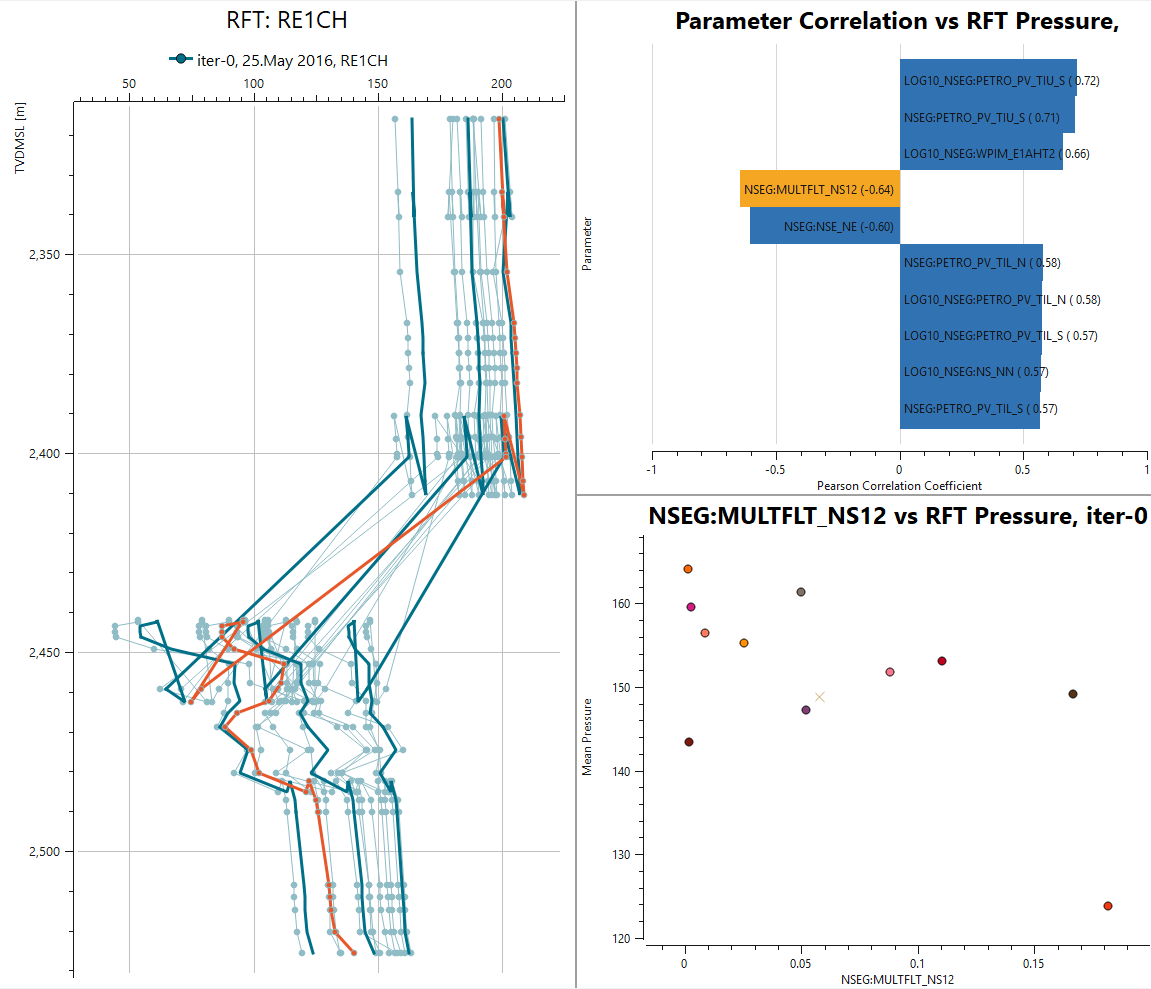
- Correlation plots can now be enabled for RFT data.
- Ensemble curve sets can be selected directly in the plot, and clicking a curve highlights it.
- Rft Segment Plots: Device-layer segment assignment is now driven by segment topology instead of measured depth, giving more reliable results for multi-branched wells.
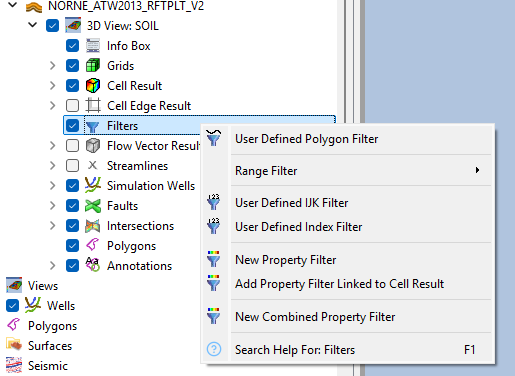
Single Filter Folder
- Geometry and property filters are now available in a single combined folder.
- Case-level cell filters can be shared across views, with support for configuring them from Python.
- A cell filter can be attached to limit a perforation interval.
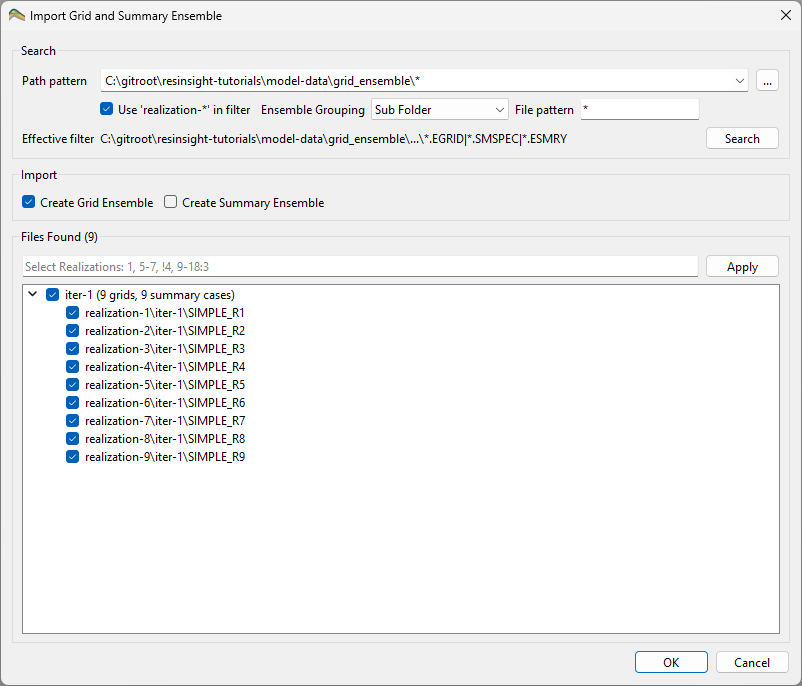
Grid Ensemble
- Import of grid ensembles now uses the shared file set concept, and grid and summary ensembles can be imported together in a single unified import dialog.
- Several separate grid-import features have been merged into one, simplifying the import menus and user interface.
- A visual indicator is shown when a grid ensemble has a varying number of K layers.
Fault Distance
- Fault distance can now be calculated to a selected set of faults.
- The user interface has been reorganized and the calculation performance improved.
Sector Model Export
Sector model export has been substantially improved, including support for a custom input DATA file, refinement of individual cells or groups of cells, and handling of aquifer, FIP, valve, BCCON and BCPROP keywords.
Well Events and Schedule Export
- Generation of time-dependent well events and schedule data.
- Improved keyword grouping and ordering in exported schedule files, optional export of WELSEGS and COMPSEGS, and added time precision in exported timelines.
Correlation and Tornado Plots
- Correlation report plots support click-to-select realization and improved control over subplot visibility.
- Correlation and tornado bar-chart behavior has been harmonized, and sorting of realizations in tornado plots improved.
- Ensemble correlation plots can be created using a delta ensemble.
Import of VTK for Geomechanical Models
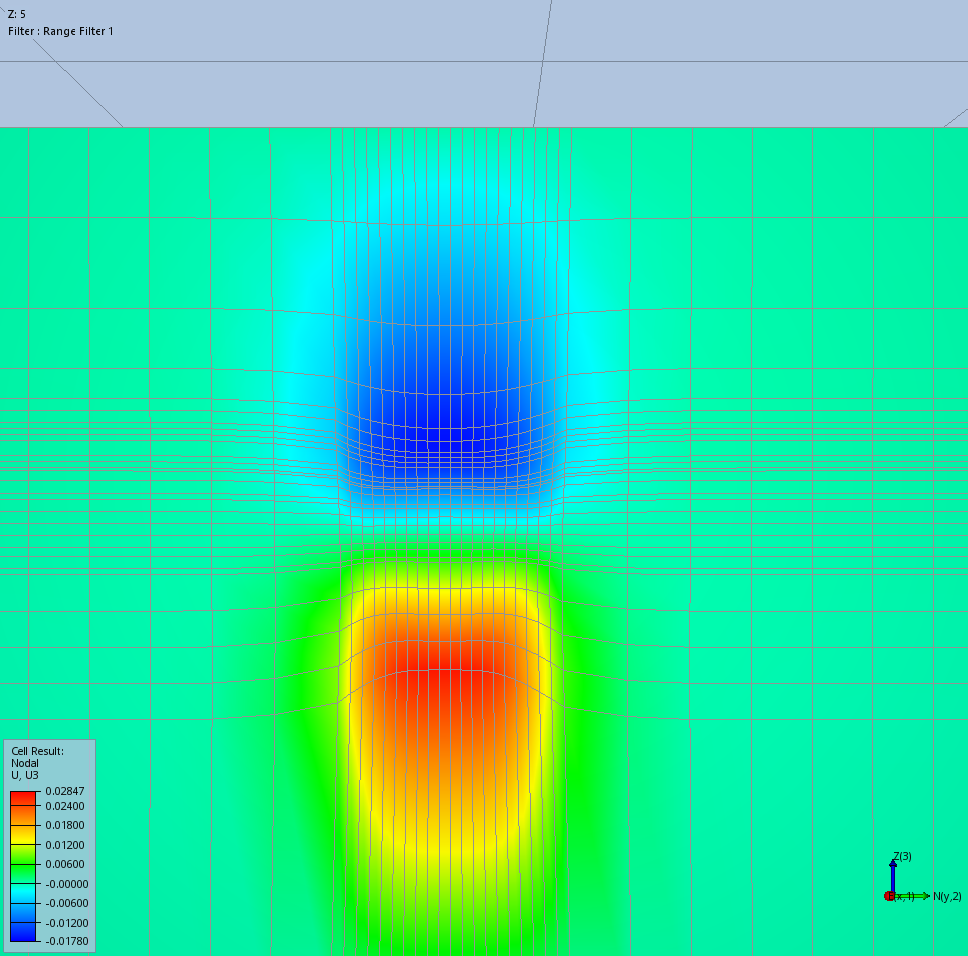
Geomechanical simulation results can now be imported from VTK files. The import handles tensor data such as stress and strain, and supports displacement visualization.
Python Improvements
- Access to the tie-in depth of a well path, control of well path and polygon colors, and the port number exposed on the Instance class.
- Create discrete grid properties, read well log information, get regular surface information, and organize Polygon objects in folders.
- Improved enum handling and documentation in the API, and a modernized Python project setup.
Fixes and Improvements
- ACTNUM is now imported correctly when stored only in the EGRID file.
- Flip XY is now applied when loading a project file, and completion export no longer omits perforation intervals when a grid has been Y-flipped.
- Well completion now uses fracture properties and K-indexes for dual porosity models.
- Plot Well Allocation no longer omits the first well connection in the plot and plot data.
- Negative values are now included in DEPTH calculations for grid models.
- Improved near/far clipping-plane calculation so very small models are placed correctly in the view.
- Fixed summary curve appearance not responding for ensemble cross-plotting, and missing individual-realization curves in the Plot Editor.
- Fixed a crash when picking a cell with a combined MULT result displayed.
- Removed duplicate entries in the recently used files list.
- General robustness and crash-handling improvements driven by automated crash reports.